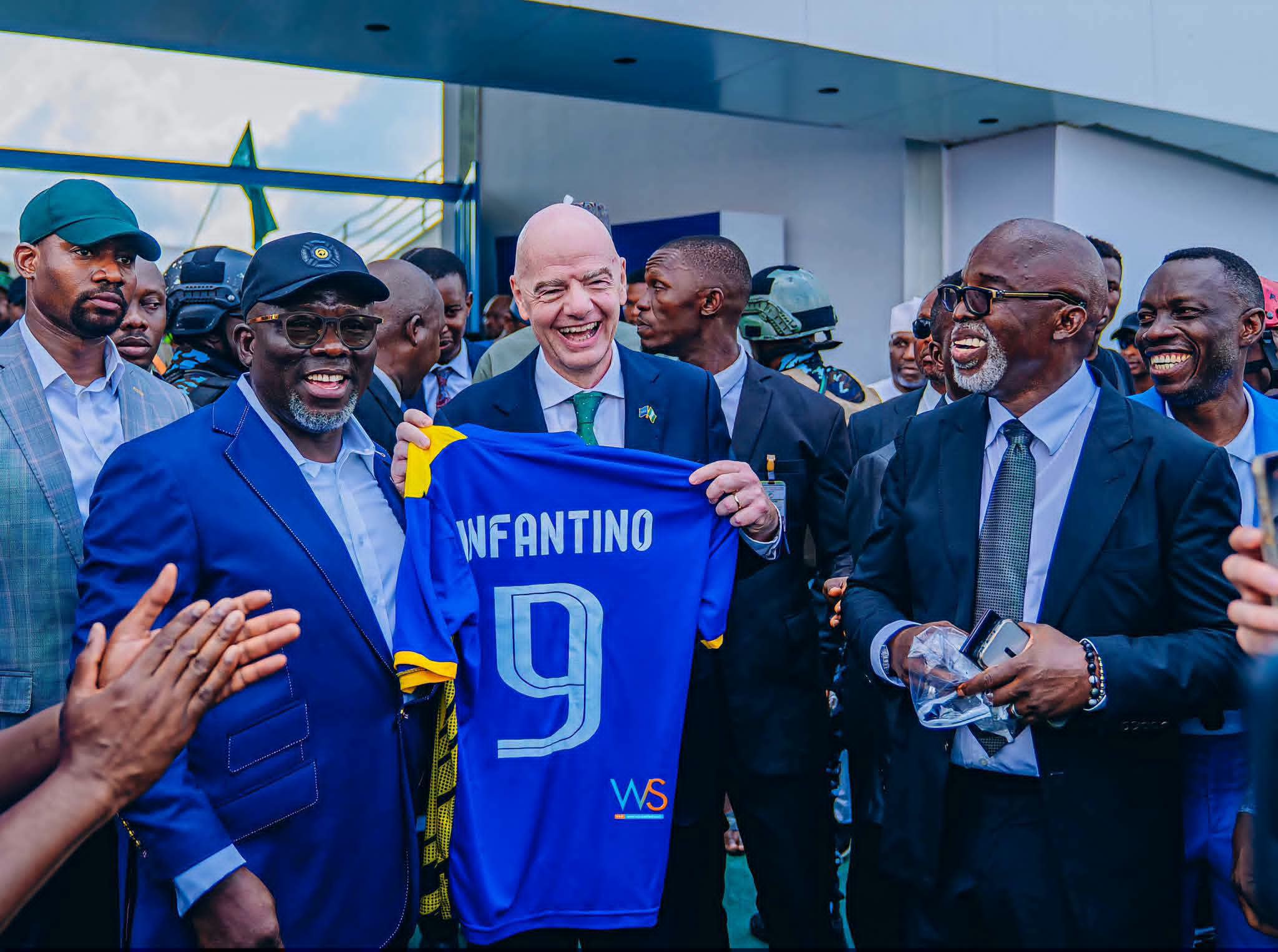
FIFA President Gianni Infantino has said Nigeria is not currently ready to host the FIFA World Cup, citing major gaps in infrastructure, but insists the country has everything it needs to stage the tournament in the future.
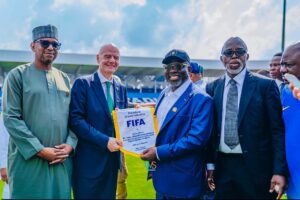
Infantino made the assessment during an exclusive interview with ARISE News in Abuja on Monday, November 23, 2026, while on a working visit to Nigeria.
Asked directly whether Nigeria could host a tournament of the magnitude of the World Cup, the FIFA boss gave a blunt but hopeful answer:
“Today, no. But tomorrow, why not?”
According to Infantino, passion alone is not enough to host the biggest sporting event on earth. What matters most is infrastructure.
“The key for hosting a World Cup is the infrastructure: the stadiums, hotels, airports and transportation. This is where the investment is really necessary,” he said.
The FIFA leader listed four critical areas which must be attended to such as Stadiums, Hotels, Airports and adequate transportation systems. Nigeria needs modern, FIFA-standard stadiums with adequate capacity, pitch quality, floodlights, VAR facilities, media centres, medical facilities and security systems, not just in Abuja and Lagos, but across several host cities.
“A World Cup brings in 32 to 48 teams, thousands of officials, journalists, sponsors and millions of fans. Nigeria would need sufficient high-quality hotel accommodation to cater for them all.
“International airports must be able to receive and process tens of thousands of visitors daily, with efficient immigration, customs and connecting flights between host cities.
“Reliable road networks, rail links and intra-city transport are essential to move fans, teams and officials safely and on time between stadiums, training centres, hotels and airports.” he noted
Infantino said Nigeria has the resources, the passion and the will to deliver on these projects, but the work must be done first.
“A country like Nigeria has the resources, the passion, and the will as well,” he said. “When I look at the resources and the possibilities that are being projected, I think Nigeria has all the cards. Nigeria is close.”
Infantino also advised Nigeria to start by hosting smaller FIFA tournaments to prove its readiness.
Nigeria last hosted a FIFA tournament in 2009, when it staged the FIFA U-17 World Cup. The Golden Eaglets reached the final but lost 1-0 to Switzerland in Abuja.
The FIFA President said successfully hosting youth tournaments, women’s tournaments and continental competitions would build confidence and show FIFA that Nigeria can handle bigger events.
Infantino’s comments came days after he inspected ongoing football projects in Nigeria.
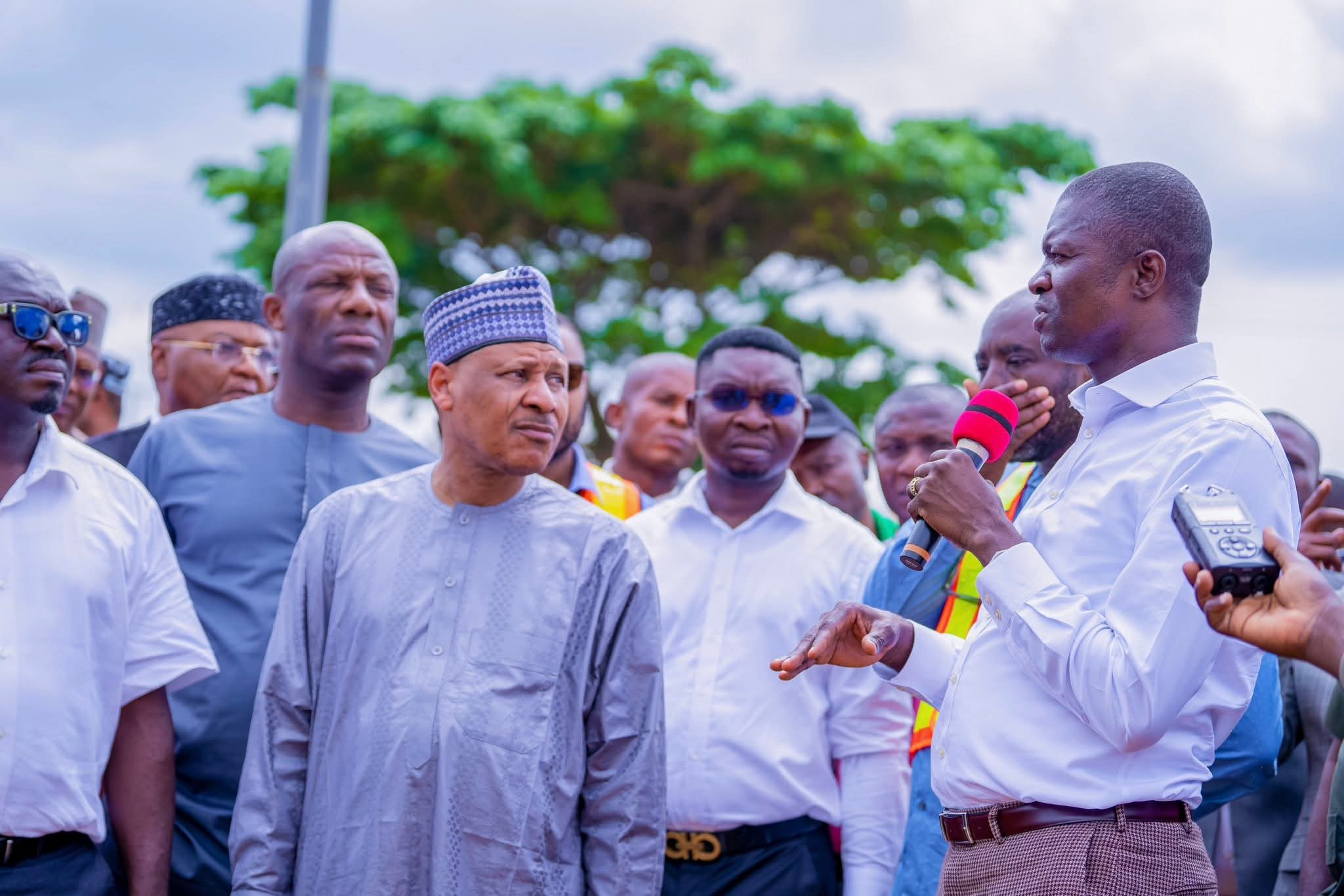
He visited the ongoing FIFA Forward Technical Centre project at the Moshood Abiola National Stadium in Abuja, being developed in partnership with the Nigeria Football Federation (NFF). The project received $4.88 million in funding from FIFA through its Forward 3.0 programme.
He also inspected the renovated Warri City Stadium in Delta State alongside FIFA Secretary-General, Mattias Grafström.
The visits, observers say, show FIFA’s growing interest in Nigeria’s football development, even if a World Cup bid is not yet on the table.
During the visit, Infantino also announced plans for FIFA to invest $25 million in each African country, alongside additional funding for the Confederation of African Football (CAF) and regional football zones.
Total investment is expected to exceed $1.5 billion over four years, aimed at boosting infrastructure, technical development and youth football across the continent.
He also congratulated Nigeria’s Flamingos on winning the FIFA Under-17 Women’s World Cup, describing their achievement as a source of pride for Nigeria and African football.
Morocco will become the second African country to host the men’s World Cup when it co-hosts the 2030 edition with Spain and Portugal. South Africa staged the 2010 edition, the first on African soil.
For Nigeria, Africa’s most populous nation and one of its biggest football powers, Infantino’s message was neither an outright rejection nor an endorsement of an immediate bid.
It was a challenge: Fix the infrastructure, prove it with smaller tournaments, and tomorrow, Nigeria could host the world.
Football analysts say a Nigerian World Cup bid would require at least 12-14 FIFA-standard stadiums, massive investment in power, security and healthcare, a national transport masterplan linking host cities, strong government guarantees and private-sector partnership. And finally a long-term legacy plan to avoid white-elephant stadiums