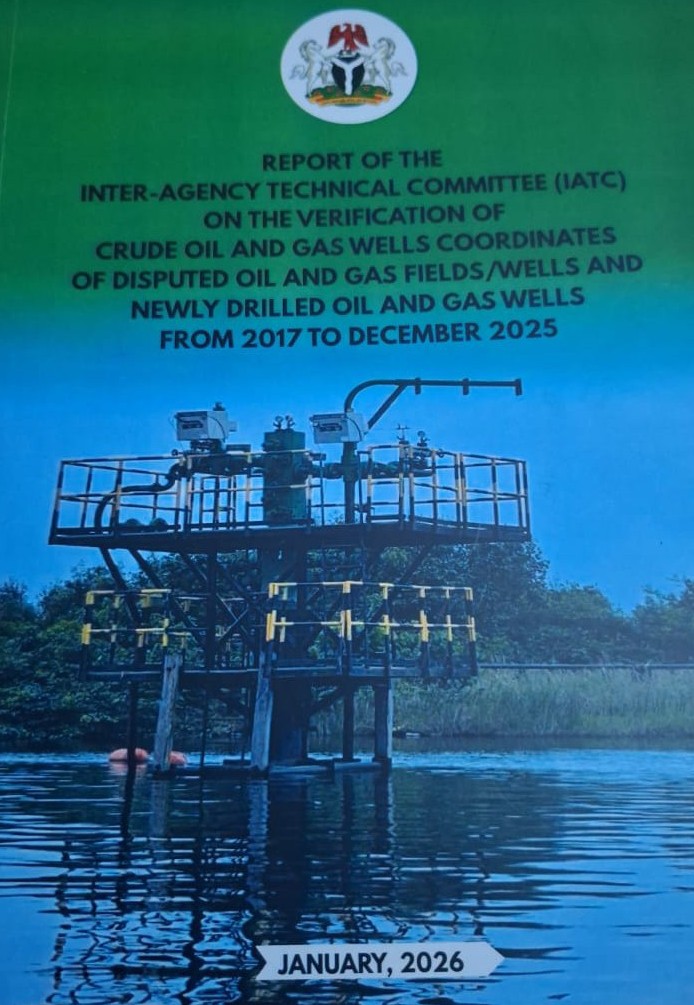
The most sensitive aspect of the Federal Government Inter-Agency Committee’s report on Nigeria’s oil-producing states is now expected to trigger urgent presidential intervention, following revelations that conflicting maps and unresolved maritime boundary demarcations may have placed Nigeria’s territorial waters and oil assets at risk.
Sources within the Inter-Agency Committee disclosed that between 2002 and 2008, after the International Court of Justice (ICJ) judgment on Bakassi, the National Boundary Commission (NBC) produced multiple maps—dated March 2004, July 2004, September 2004, January 2005 and January 2008—allocating portions of the Cross River Estuary body of water that were not ceded by the ICJ judgment.
However, during proceedings at the Supreme Court in 2012, the NBC allegedly deposed in an affidavit that the entire Cross River Estuary had been ceded to Cameroon, even as the same NBC maps were later relied upon to allocate oil wells within the estuary to Akwa Ibom State in 2008.
At the commencement of the final plenary of the Inter-Agency Committee at RMAFC, the Chairman of the NBC, Dr. Adamu Adaji, was said to have forwarded a letter to the RMAFC Chairman directing the Committee to rely on the 2008 Oil Dichotomy Study Model Map for plotting Cross River and Akwa Ibom State coordinates.
The Cross River technical delegation reportedly objected, tendering official correspondence from the NBC itself confirming that Nigeria has not demarcated the international maritime boundary with Cameroon since the 2002 ICJ judgment, nor the internal maritime boundary between Cross River and Akwa Ibom States, and that the 2008 map was provisional.
Further documents presented to the Committee included a letter from the Office of the Surveyor-General of the Federation discrediting the 2008 NBC map, as well as a public address delivered in Uyo in 2025 by the NBC Chairman unveiling newer maps depicting Cross River State as a coastal maritime state in the Gulf of Guinea.
On this basis, Cross River State insisted that all plotting of crude oil and gas coordinates must be undertaken on Nigeria’s most accurate scientific cartographic base—the Nigerian Administrative Map, 10th Edition.
Security and technical experts within the process warned that reliance on the 2008 provisional map could deny Nigeria an estimated 780 hectares of territorial waters within the Cross River Estuary up to the Akwayafe Estuary boundary and further expose over 49 oil wells in OML 114 within Cross River’s maritime territory to transboundary complications with Cameroon.
These risks, it was learnt, formed the basis for the RMAFC Chairman’s decision to escalate the Akwa Ibom–Cross River component of the report directly to President Bola Ahmed Tinubu for urgent guidance.
The President has already constituted a Presidential Committee to review the Inter-Agency Committee’s findings. Upon presidential directives, the RMAFC Board of Commissioners is expected to convene to approve implementation.
Stakeholders warn that the outcome will not only shape derivation revenue and oil well attribution, but also Nigeria’s territorial integrity and maritime governance in the Gulf of Guinea.
By: John Gaul-Lebo