
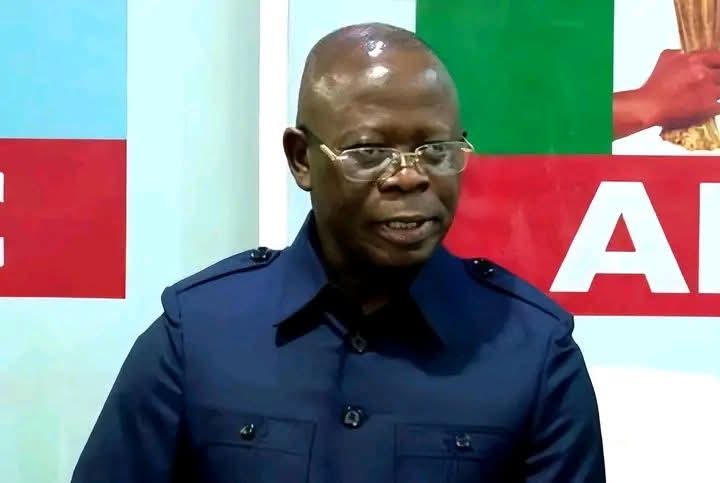
Senator Adams Oshiomhole, representing Edo North, has accused Senate President Godswill Akpabio of benefiting from Senate ranking rules he is now attempting to amend, arguing that the same system allowed Akpabio to rise quickly to a principal leadership position upon entering the upper legislative chamber.
Oshiomhole made the remarks during an interview with AIT News, where he discussed ongoing debates within the Senate over proposed changes to eligibility and ranking requirements for leadership positions in the National Assembly.
He argued that the push for stricter rules contradicts past experiences within the Senate, where Akpabio himself reportedly attained a senior leadership position at the beginning of his legislative career.
According to his words, “Now let me say why this has serious moral failings. The Senate President became minority leader on his first day in office and in his first term when he got into the Senate. He became a principal officer, minority leader. He is not the one who presided. And now he is asking us to change those rules such that even somebody who came through the court, you can’t even be number two.”
Oshiomhole said the situation raises moral and procedural concerns, especially given that the current proposal seeks to introduce stricter conditions for senators aspiring to principal offices such as Senate President or Deputy Senate President.
According to him, such reforms would significantly alter the existing structure of Senate leadership selection and potentially exclude lawmakers who have not served multiple consecutive terms.
He argued that Akpabio’s own political trajectory within the Senate demonstrates that leadership positions have historically not been restricted strictly by length of service, especially when party and political considerations are taken into account.
Oshiomhole maintained that any attempt to impose new eligibility rules must be consistent and not selectively applied to suit current political interests or leadership dynamics.
He further questioned the fairness of introducing new requirements that could limit the chances of lawmakers who have gained entry into the Senate through legal or electoral processes but have not completed extended years of service.
The former Edo State governor said leadership selection within legislative bodies should remain guided by democratic principles, party consensus, and competence rather than rigid tenure-based restrictions.