
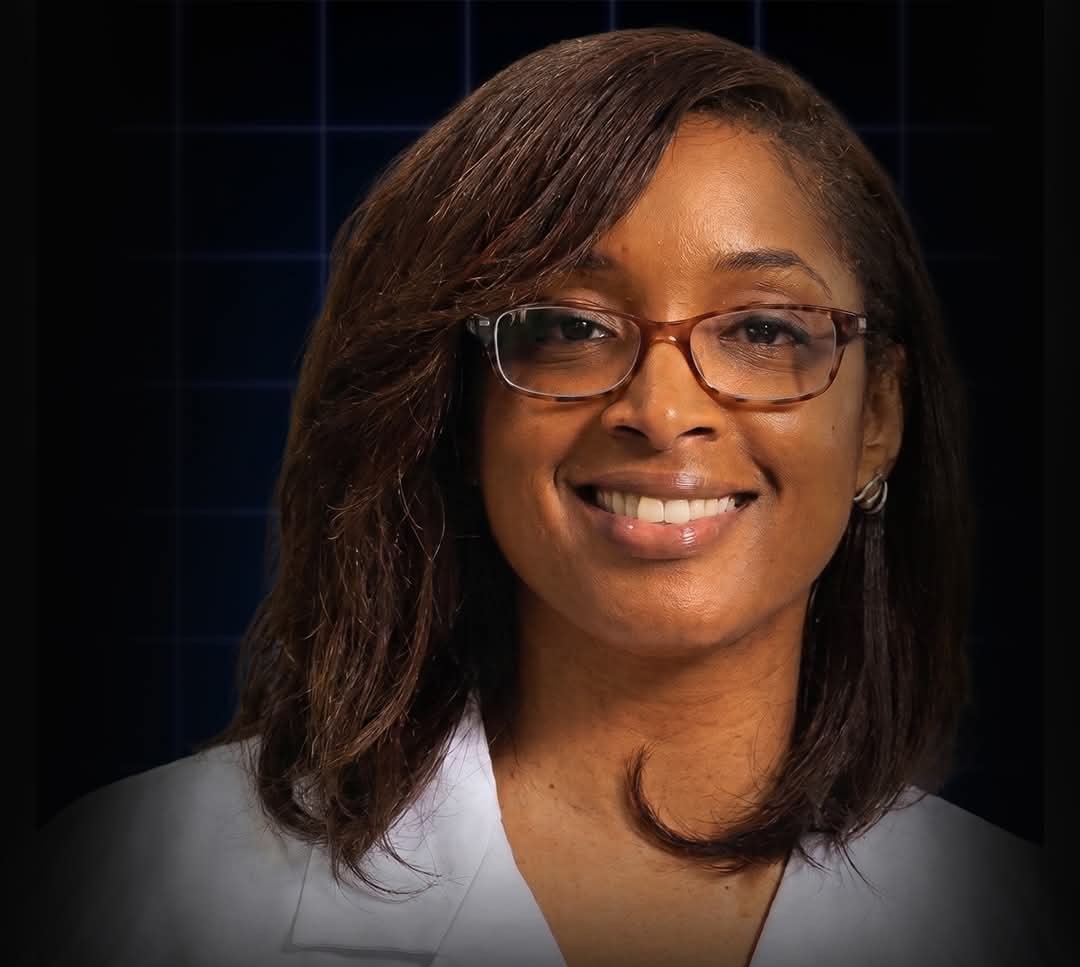
In one of the rarest achievements in modern science, American nuclear chemist Clarice Phelps became the first African American woman to be involved in the discovery of a chemical element.
Her work helped confirm Tennessine (Ts), Element 117, the second-heaviest element ever discovered and one of the last four elements added to the periodic table.
The periodic table had not gained a new element in decades when an international team set out to create Element 117.
At Oak Ridge National Laboratory (ORNL) in Tennessee, Phelps was part of the team tasked with one of the most difficult jobs in the entire experiment: purifying Berkelium-249 (Bk-249) — an extremely rare and highly radioactive isotope.
Over three intense months, Phelps and her colleagues carried out dozens of delicate chemical separations to isolate just 22 milligrams of ultra-pure Berkelium-249, less than a single grain of rice.
That tiny amount was then sent to the Joint Institute for Nuclear Research in Russia, where scientists bombarded it with Calcium-48 ions. The collision fused the atoms together, creating a handful of atoms of Element 117.
The discovery was confirmed by the International Union of Pure and Applied Chemistry (IUPAC) in 2015, and the element was officially named Tennessine in 2016, in honour of Tennessee and the contributions of Oak Ridge National Laboratory, Vanderbilt University, and the University of Tennessee.
Tennessine, along with Nihonium (113), Moscovium (115), and Oganesson (118), completed the seventh row of the periodic table.
Phelps’ journey to that historic moment was far from conventional.
Born in Minneapolis and raised in Nashville, she graduated from Tennessee State University in 2003 with a degree in Chemistry. She then served four and a half years in the U.S. Navy’s Nuclear Power Program, running reactor chemistry aboard the aircraft carrier USS Ronald Reagan.
She joined Oak Ridge National Laboratory in 2009. By 2010, she was working in the Nuclear Security and Isotope Technology Division, where she helped purify the Berkelium-249 that made the Element 117 experiment possible.
“Once we got confirmation, I was like, ‘oh my gosh, the little squares on the periodic table, we helped put that there,’” Phelps later recalled.
Despite her crucial role, Phelps was initially left out of much of the celebration.
Her name was omitted from a commemorative plaque at Oak Ridge honouring the discovery, and she was initially not invited to the lab’s celebration gala. It took months of advocacy for her name to be added to the plaque.
Her Wikipedia biography was also deleted in 2019, sparking international debate about the recognition of women and Black scientists in STEM.
That same year, IUPAC formally recognised her in its Periodic Table of Younger Chemists, citing her as:
“The first African American woman to be involved with the discovery of an element, tennessine.”
She later shared her story in a widely viewed TEDx Talk titled, “How I Claimed a Seat at the Periodic Table.”
Creating a superheavy element is not just about adding a square to a chart. It tests the limits of nuclear physics, pushes chemical separation technology to its extremes, and helps scientists understand how heavy atoms behave, knowledge that feeds into medicine, energy, and materials research.
For Phelps, the discovery also became a powerful symbol of representation. She has since become a leading voice for diversity in STEM, mentoring young scientists and advocating for greater visibility for Black women in science.
She has gone on to lead isotope production projects at Oak Ridge, including work on Plutonium-238 for NASA missions, and Nickel-63 and Selenium-75 for industrial use. In 2026, she completed a PhD in nuclear engineering at the University of Tennessee.