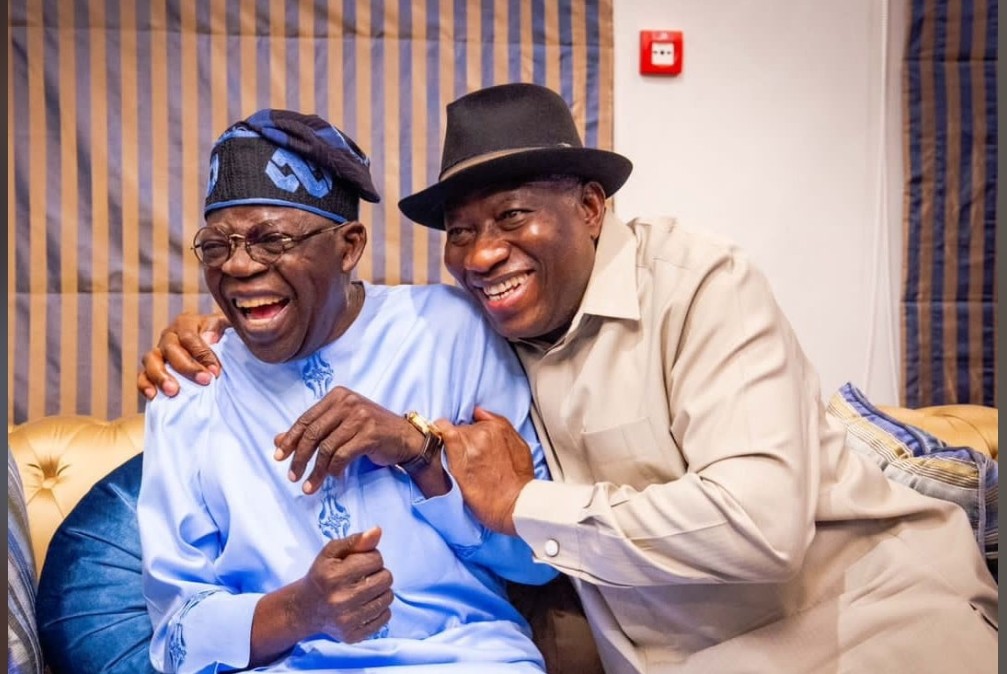
Calls have intensified on President Bola Ahmed Tinubu to formally nominate former President Goodluck Ebele Jonathan as Nigeria’s candidate for the position of United Nations Secretary-General.
The call comes as the race for the 10th UN Secretary-General enters a decisive phase, with the United Nations Security Council expected to begin closed-door straw polls this week to recommend a successor to the incumbent, António Guterres.
Guterres, a former Prime Minister of Portugal and the 9th Secretary-General of the world body, assumed office on January 1, 2017. His second and final five-year term will end on December 31, 2026, bringing to a close a decade of leadership at the UN headquarters in New York.
Proponents of the Jonathan candidacy argue that the former Nigerian leader possesses the global stature, democratic credentials and peace-building experience required to lead the world body at a time of escalating conflicts, climate crisis and deepening geopolitical divisions.
Jonathan, who served as President of Nigeria from 2010 to 2015, has since leaving office carved a reputation as one of Africa’s foremost envoys for peace and democracy. He is the Chair of the ECOWAS Council of the Wise, leader of several African Union and Commonwealth election observation missions and founder of the Goodluck Jonathan Foundation, dedicated to democracy, peace and good governance in Africa.
In 2025, he was named winner of the Founders’ Sunhak Peace Prize in Seoul, South Korea, for his commitment to peaceful political transition, notably his historic concession of defeat in the 2015 general election – an act President Tinubu himself recently described as preserving “Nigeria’s democracy when it mattered most.”
Advocates say a Jonathan nomination would project Nigeria’s soft power and reinforce Africa’s demand for greater representation in global governance, including the long-standing call for a permanent African seat on the UN Security Council – a position recently reaffirmed by Nigeria’s Permanent Representative to the UN, Ambassador Jimoh Ibrahim.
However, the bid faces significant diplomatic hurdles. By tradition, though not by statute, the office of Secretary-General rotates among the UN’s regional groups. Africa has produced two Secretaries-General: Boutros Boutros-Ghali of Egypt (1992-1996) and Kofi Annan of Ghana (1997-2006).
With António Guterres from the Western European and Others Group (WEOG) set to step down, the informal rotation favours Latin America and the Caribbean, a region that last produced a Secretary-General, Javier Pérez de Cuéllar of Peru, from 1982 to 1991. Eastern Europe, which has never held the position, is also staking a claim.
The sentiment within the UN is also strongly in favour of appointing the first female Secretary-General in the organization’s 80-year history. Four of the five officially nominated candidates so far are women from Latin America and the Caribbean, including former Chilean President Michelle Bachelet, Rebeca Grynspan of Costa Rica and Guyana’s Ambassador Carolyn Rodrigues-Birkett.
The selection process is governed by Article 97 of the UN Charter. Candidates must be nominated by a Member State, undergo interactive dialogues with the General Assembly, and ultimately secure at least nine votes in the 15-member Security Council with no veto from any of the five permanent members – the United States, United Kingdom, France, Russia and China – before confirmation by the 193-member General Assembly.
While Nigeria’s nomination alone would not guarantee election, supporters argue it would send a powerful signal that Africa’s most populous nation is ready to compete for leadership at the highest level of multilateral diplomacy and believes in the merit, peace and democratic values that Jonathan has come to symbolize.
As at press time, the Presidency has not issued an official response to the call.