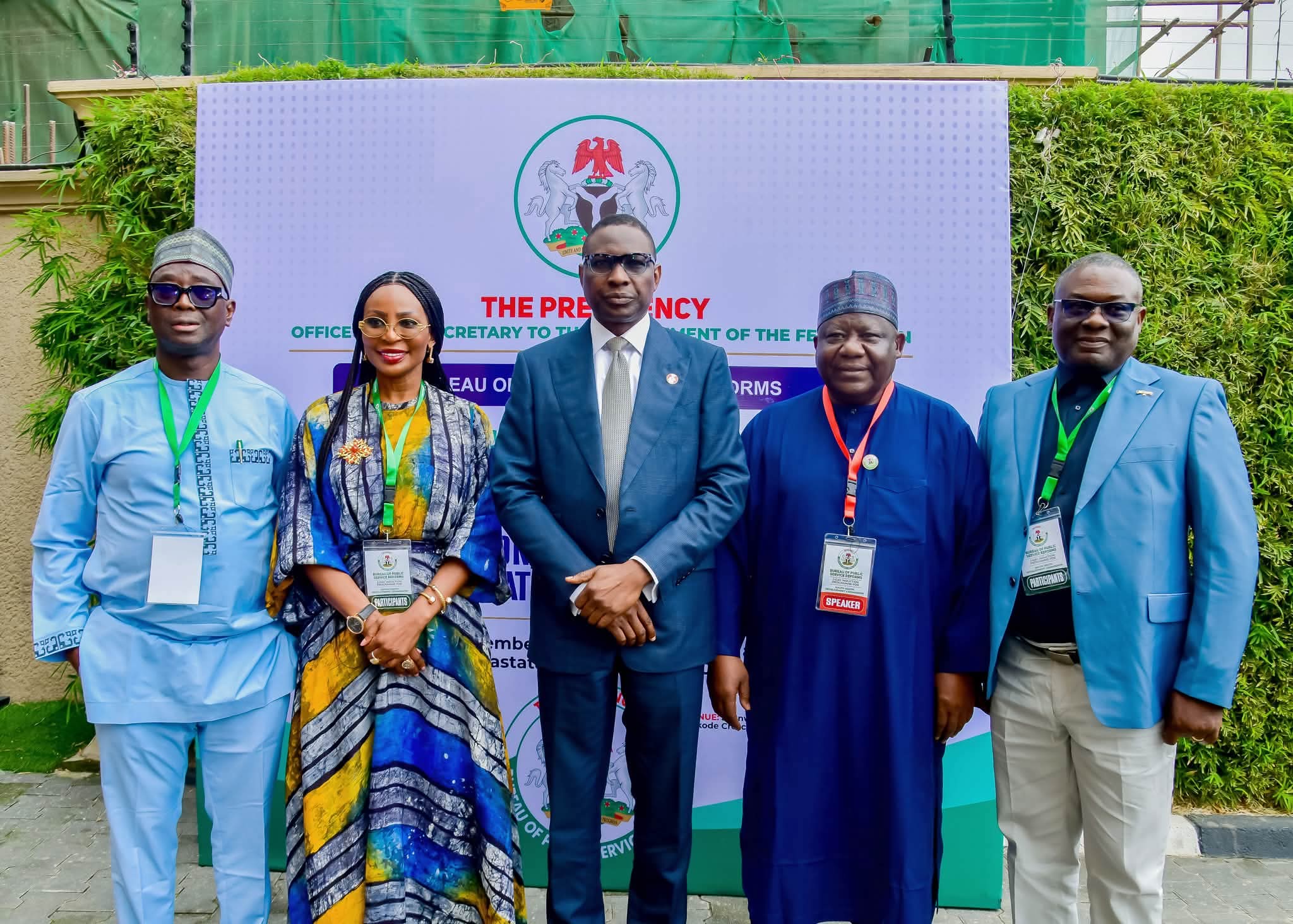
The Board and Management of the South-South Development Commission, SSDC, have intensified efforts to entrench transparency, compliance and institutional integrity as Day Two of its Workshop on Institutional Governance and Regulatory Compliance focused on accountability and anti-corruption mechanisms.
Held
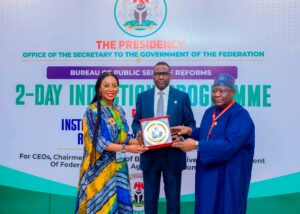

as part of the Commission’s induction and capacity-building programme for its leadership, the second day of the workshop brought together heads of Nigeria’s foremost governance, anti-corruption, procurement and public finance institutions.
Ms. Usoro Akpabio Managing-Director of the South South Development Commission, SSDC, leads the delegation of the Board and management of the Commission at the high profile workshop.
Delivering the keynote on anti-corruption, the Chairman of the Independent Corrupt Practices and Other Related Offences Commission, ICPC, Dr. Musa Adamu Aliyu, SAN, spoke on “The Role of ICPC in the Prevention of Corrupt Practices in the Public Service.” He charged the SSDC leadership to build internal preventive systems that will make corruption difficult and unattractive from inception.
He was followed by the Chairman of the Economic and Financial Crimes Commission, EFCC, Mr. Olanipekun Olukoyede, who addressed “The Role of EFCC in Improving Accountability in the Public Service.” Olukoyede emphasized strict financial discipline, asset declaration and the need for public institutions to institutionalize accountability as a culture, not an afterthought.
In a highly practical session, the Director-General of the Bureau of Public Procurement, BPP, Dr. Adebowale Adedokun, provided guidance on the Essentials of the Public Procurement Act, underscoring due process, competitive bidding, transparency and value for money as non-negotiable pillars for any interventionist agency like the SSDC.
On administrative efficiency, the Director-General of the Bureau of Public Service Reforms, BPSR, Dr. Dasuki Ibrahim Arabi, led discussions on Guidelines on Administrative Procedures in the Public Service: Roles and Responsibilities of the Board. He clarified the boundaries between the Board’s policy oversight role and Management’s day-to-day execution, a critical distinction for institutional harmony.
The session on fiscal accountability featured Mr. Emmanuel Shagaya, Director, Treasury Single Account, TSA, who represented the Accountant-General of the Federation. He spoke on “The Treasury Single Account: Roles, Impacts and Challenges,” highlighting how full compliance with the TSA framework ensures transparency, blocks leakages and strengthens public financial management.
Also lending a corporate governance perspective was Dr. Muhammed K. Ahmed, President of the Society for Corporate Governance, who stressed ethical leadership, board effectiveness, risk management and stakeholder accountability.
The workshop, which ended with robust interactions, questions and experience-sharing, was described by participants as timely and foundational for a new Commission with a huge mandate for the South-South region.
For the Board and Management, the two-day engagement provided direct learning from the leadership of Nigeria’s key regulatory institutions, equipping them with the tools to deliver on their mandate with integrity.
The exercise reaffirmed the Commission’s governing philosophy: Strong governance. Accountable leadership. Sustainable development.