
By: Eugene Upah
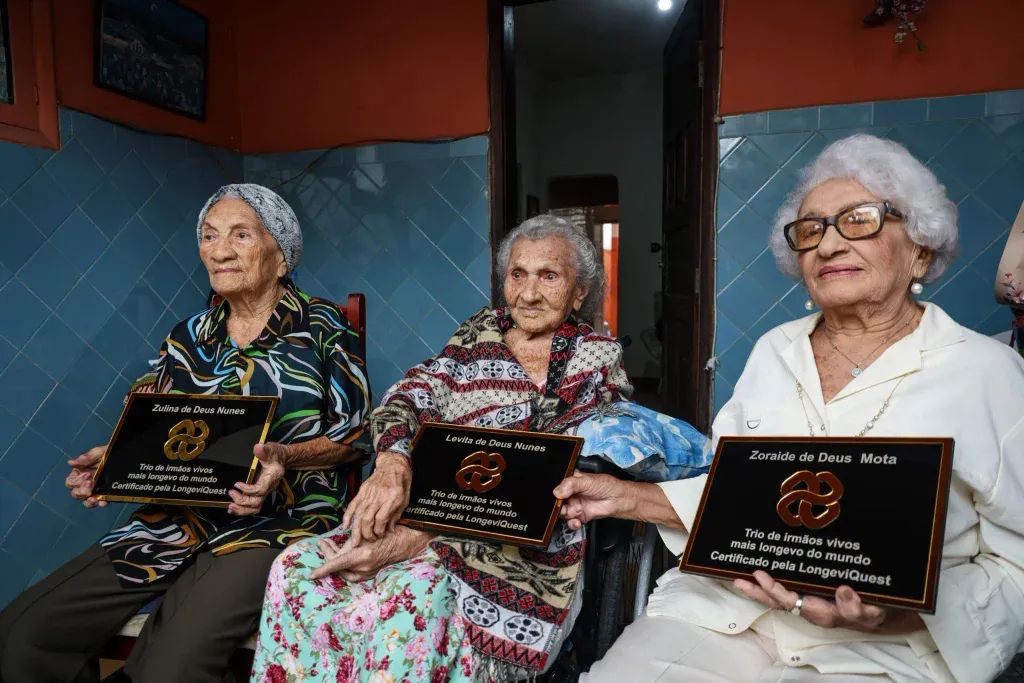
With 316 years between them, three sisters from the United Kingdom have been officially recognized as the world’s oldest living siblings, as scientists launch an in-depth DNA study to uncover the secrets behind their extraordinary longevity.
The sisters aged 109, 104 and 103 have lived through two world wars, the Great Depression and the rise of the internet. Now, researchers hope their genes can help unlock clues to healthy aging.
The study, being conducted by a team of geneticists and gerontologists, focuses on identifying rare genetic variants, lifestyle factors and family history patterns that may contribute to exceptional lifespans.
“We are looking at families where multiple members reach 100 and beyond,” said the lead researcher. “These sisters are a unique case. Having three siblings all over 100 in one family is exceptionally rare and their DNA could hold valuable information about resilience to age-related disease.”
Born between 1916 and 1922, the sisters grew up in a small rural community and have remained close throughout their lives.
The eldest, 109, still reads the daily newspaper and enjoys gardening. The middle sister, 104, is known for baking and playing cards with great-grandchildren. The youngest, 103, credits long walks and a simple diet for her vitality.
Family members say the siblings have always supported each other. They lived independently well into their 90s and now reside in assisted living facilities near one another.
“They’ve always been there for each other,” a granddaughter said. “They argue like sisters, laugh like teenagers and check on each other every single day. That bond, we think, has a lot to do with it.”
Scientists will sequence the sisters’ genomes to look for protective genetic markers linked to cardiovascular health, cognitive function, and cellular aging. The team will also examine epigenetic data chemical changes that affect how genes work over time and compare it to data from their children and grandchildren.
Researchers are particularly interested in whether the sisters share rare variants in genes associated with inflammation, metabolism and DNA repair, which have previously been linked to longevity in centenarian studies.
Beyond genetics, the study will document diet, sleep patterns, social connections and physical activity across their lifetimes.
“Longevity is not just genes,” the research team noted. “It’s genes plus environment plus mindset. These women give us a living laboratory to study all three.”
According to gerontology databases, siblings who all live past 100 are extremely uncommon. Most longevity research has focused on individuals. A case involving three living sisters surpassing 100 years is believed to be the first of its kind documented worldwide.
The family has given full consent for the research, with the hope that findings could benefit future generations.
“We don’t feel special, we just lived our lives,” the 104-year-old sister said. “But if our blood can help doctors help other people live longer and better, then that’s a good thing.”
Scientists expect preliminary results from the DNA analysis within 12 to 18 months. The team will also follow the sisters over time to track health changes.
For now, the three women continue their daily routines morning tea together, phone calls with family and planning their next birthday celebrations.
With 316 years of combined life experience, they may have more to teach science than any lab ever could.