
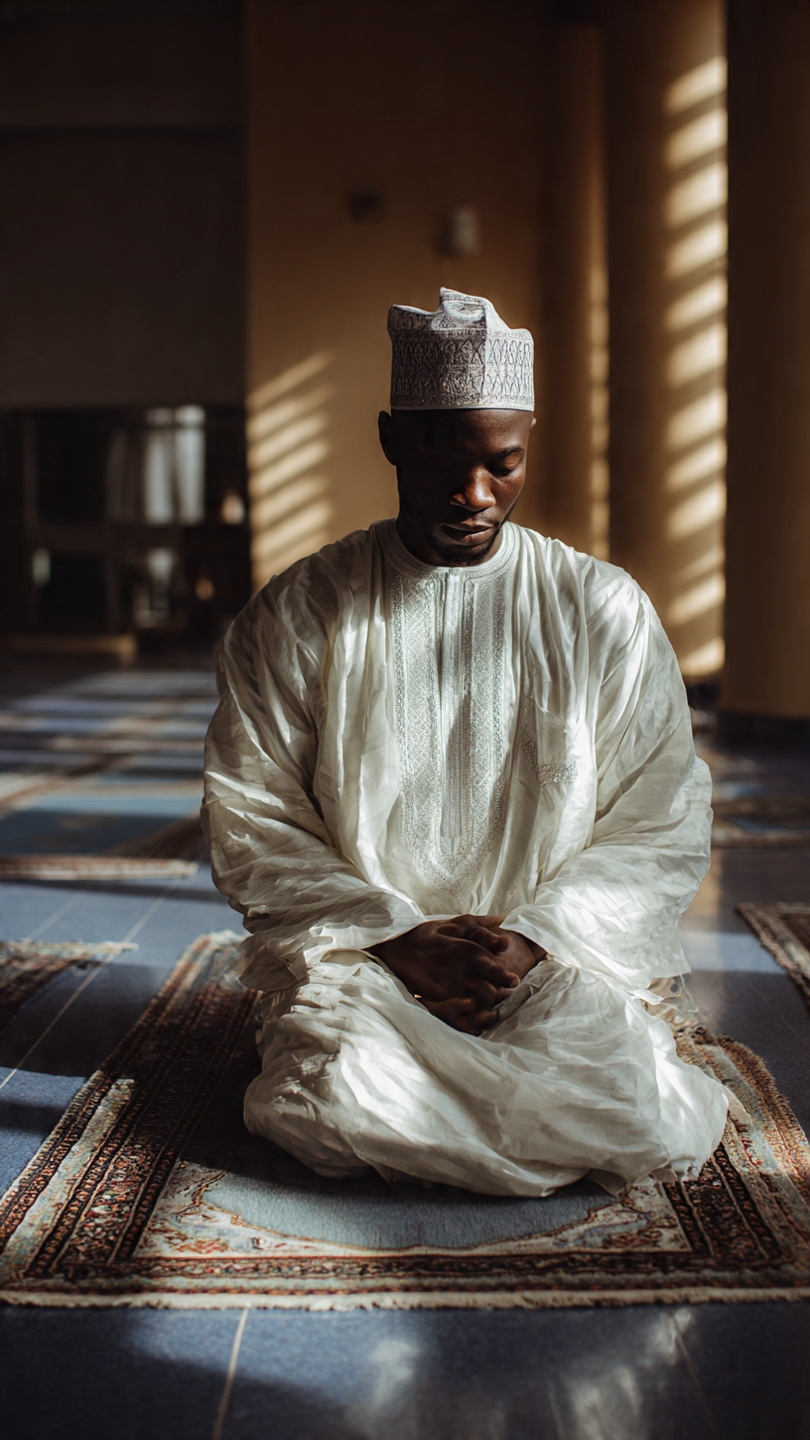
In a rare and striking demonstration of religious conviction over material wealth, a Kano-based man has formally rejected his share of an inheritance worth ₦67 million, citing concerns that his late father’s business enterprises violated Islamic law.
The decision, which has sparked intense conversation across Kano State and Northern Nigeria, shows the deep-seated influence of Islamic jurisprudence (Sharia) on personal finance and inheritance practices in the region.
The young man, identified as Malam Aliyu Ibrahim, a resident of the Kano metropolis, was positioned to receive the substantial sum following the recent finalization of his late father’s estate. However, during the final distribution meeting with family members and legal representatives, Ibrahim stunned those present by declining the funds.
According to family sources, Ibrahim’s late father had built a lucrative business empire over several decades. While highly profitable, Ibrahim maintained that aspects of the business involved transactions and practices explicitly prohibited (Haram) under Islamic principles.
The decision has drawn attention across the state, sparking conversations on piety, Islamic inheritance and personal accountability in financial matters.
However, one of his sons informed the family’s Shari’a court and relatives that he would be renouncing his share. He said investigations he conducted after his father’s death showed that a significant portion of the estate came from a trade that is considered haram or forbidden, in Islam.
“I am grateful to Allah for what my father provided for us while he was alive. But I cannot build my life on wealth I now believe was earned through means not permitted in our religion. I Cannot Eat Haram Wealth” the man was quoted as telling family elders.
He added that he would rather forgo the money than risk accountability before Allah. Other siblings, the sources said, have accepted their portions and are proceeding with the estate’s distribution.
Islamic scholars in Kano say the action, while uncommon, aligns with a long-held teaching in Islam: that a Muslim must avoid wealth earned through haram means, even if inherited.
“Islam commands that one’s earnings must be halal, lawful and pure. If a person becomes convinced that inherited wealth is from an unlawful source, scholars often advise that he should not benefit from it,” said Malam Yusuf Sani, an Islamic teacher in Kano. “The priority is taqwa, God-consciousness, over material gain.”
Under the Maliki school practiced widely in Northern Nigeria, inheritance is typically distributed among heirs according to fixed shares. Renouncing a share is permissible if the heir does so willingly and without coercion, lawyers familiar with Shari’a court procedures note.
The story has generated mixed reactions on radio and social media in Kano.
Some residents praised the man’s conviction. “This is rare integrity in our time. Many people would take the money first and ask questions later,” said Aisha Muhammad, a trader at Kantin Kwari Market.
Others questioned the practicality of the decision. “₦67 million is life-changing. If the business was already concluded, why should the son suffer for it?” said Ibrahim Musa, a civil servant.
Religious leaders have urged families to be transparent about sources of wealth while the deceased is alive, to prevent such dilemmas for heirs.
Inheritance disputes are not new in Kano. Shari’a courts in the state frequently handle cases of contested estates, alleged forgery of documents and claims of unlawful occupation of family property. In recent years, the Kano Shari’a Court Division has also investigated cases involving missing inheritance funds.
Legal experts say cases like this show the intersection of faith, family and the law in Northern Nigeria, where Shari’a and civil procedures often run side by side in personal matters.
As of the time of filing this report, the family’s Shari’a court was said to be documenting the son’s renunciation so his share can be redistributed among the other eligible heirs in line with Islamic law.