By: Eugene Upah
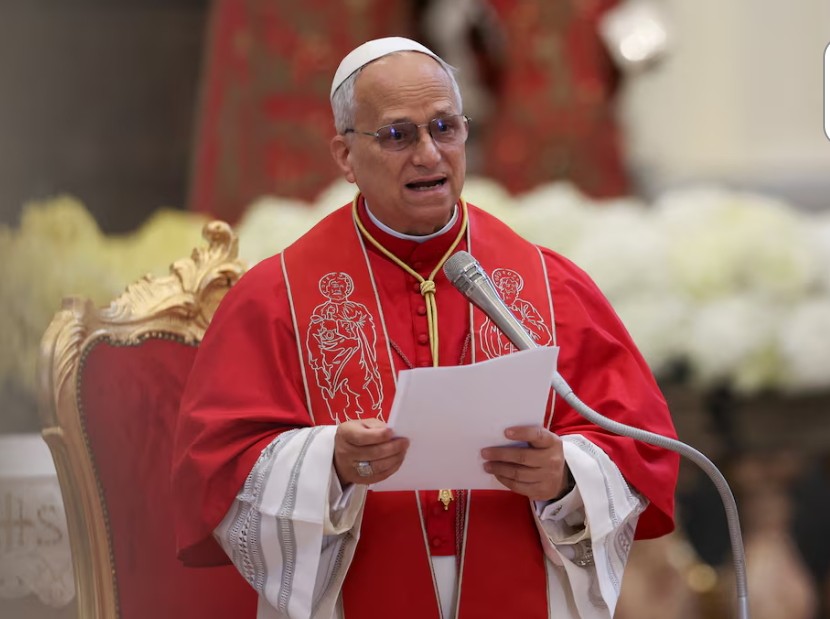
Standing in the heart of one of Europe’s most notorious environmental disaster zones, Pope Leo XIV delivered a blistering rebuke on Saturday against corporations that pursue massive financial gain at the direct expense of human health and the planet.
During a deeply emotional four-hour visit to the southern Italian city of Acerra, the Pontiff slammed what he described as the “dizzying profits of a few, blind to the needs of people,” and called for an immediate end to the corporate impunity driving the global climate and pollution crises.
Acerra sits roughly 220 kilometers (137 miles) south of Rome in an area near Naples infamously dubbed the “Land of Fires” or the “Triangle of Death.” For nearly four decades, the region has been a hotbed for the illegal dumping and burning of toxic industrial waste—a lucrative illicit business dominated by the local Camorra mafia group alongside unscrupulous private contractors.
The resulting environmental degradation has left the local population suffering from abnormally high rates of cancer and respiratory illnesses.
Arriving by popemobile, Pope Leo—the first American to lead the Catholic Church—was greeted by thousands of residents waving yellow-and-white Vatican flags. Many in the crowd held up large posterboards featuring photos of children and spouses who had died from oncological diseases linked to local pollution.
“I came here today to gather the tears of families who have lost their loved ones to these environmental crimes,” Pope Leo said, speaking to an emotional crowd outside the Cathedral of Santa Maria Assunta. “Unscrupulous people and organizations have been allowed to act with impunity for too long.”
In his address, the Pope framed environmental destruction not merely as a political or scientific failure, but as a severe moral crisis. He implored global industry leaders and governments to undergo an “ecological conversion” and prioritize human lives over corporate balancing sheets. The Pope urged businesses to immediately reduce emissions, reform hazardous waste disposal, and invest heavily in clean energy alternatives like solar and wind power.
He called on governments to enact stricter regulatory frameworks to hold corporate polluters legally and financially accountable. The Pontiff indicated the systemic injustice of pollution, noting that poor and marginalized communities inevitably bear the heaviest burdens of climate disasters and toxic waste, despite contributing the least to global emissions.
“We must reject the temptations of power and enrichment linked to practices that pollute our land, water, air, and social coexistence,” the Pope declared. “Protecting nature is not optional—it is a profound moral responsibility because protecting the environment means protecting life itself.”
The Pope’s visit comes at a time of escalating political tension regarding regional waste management. The European Court of Human Rights recently ruled that Italian authorities had systematically failed to protect residents from illegal dumping since 1988. The court gave Prime Minister Giorgia Meloni’s government a strict two-year deadline to map out all toxic sites and notify the public of health risks—a directive that has since prompted the deployment of a specialized military task force to spearhead environmental clean-up.
Vatican observers note that Saturday’s aggressive rhetoric marks a significant sharpening of Pope Leo’s public messaging. Since his election, Leo has steadily built upon the environmental legacy of his predecessor, Pope Francis, who authored the landmark green encyclical Laudato Si’.
The timing of this speech is highly strategic. Pope Leo is scheduled to release his own first major papal teaching document, Magnifica Humanitas, which is expected to examine the ethical frontiers of modern society—including the environmental footprint and societal disruption of rapid technological expansions like Artificial Intelligence.
By taking his message directly to the contaminated fields of southern Italy, the Pope has sent a clear signal to multinational corporations and world leaders alike: the Vatican intends to place corporate environmental responsibility at the absolute center of its global moral agenda.
For more context on the Vatican’s expanding stance on corporate ethics and climate justice, you can watch this Dawn News broadcast covering Pope Leo’s speech, which outlines the global reactions and policy implications of his remarks in Acerra.